
A budget vinyl fence lasts about 15 to 20 years in Kansas, and it can yellow along the way. The Country Estate vinyl we install is a different product. It carries a 50-year or limited lifetime warranty, non-prorated, and that warranty covers abnormal discoloration. In our experience it holds its color. Either way, the thing that decides how long a vinyl fence stands is the post inside it.
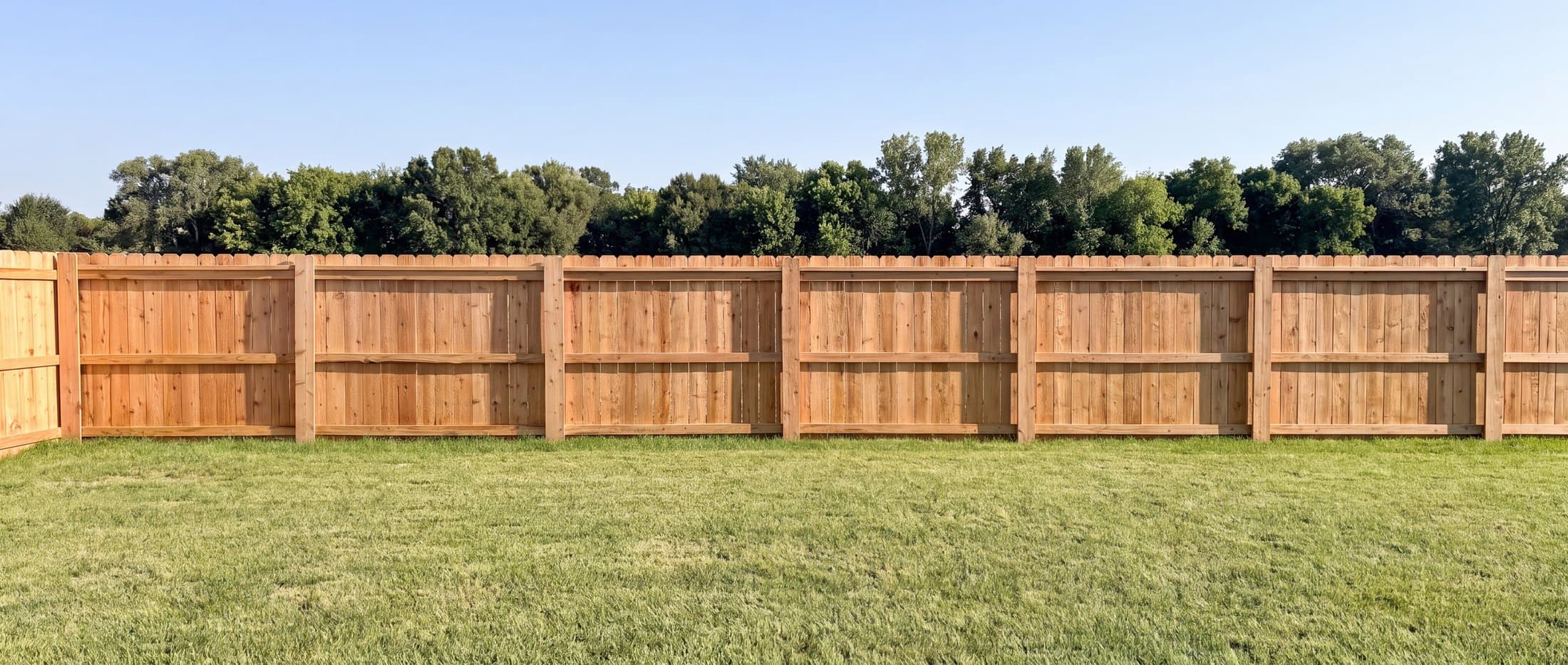
We build both cedar and vinyl, so here is the true comparison. One note on the photos: the pictures on this post show our cedar work, not vinyl.
How long does a vinyl fence last in Kansas?
National guides put it high. Angi says a vinyl fence lasts 20 to 30 years when it's properly installed and maintained, and some go 50 years or more. That's a national number, not a Kansas one.
Our number for budget vinyl here is 15 to 20 years. Kansas is hard on a fence. Long, bright summers. Real cold in January. Wind most days. And hail. The cheap stuff on the rack at a big box store isn't built for all of that at once.
That's the same range we give for a cedar fence that gets stained twice over its life. So budget vinyl doesn't buy you more years than good cedar. It buys you no staining.
Why does some vinyl turn yellow?
Sun. A white fence facing south or west takes a full Kansas summer head on, year after year. Budget vinyl can yellow under that. Once it does, there's no stain or paint that fixes it right, and a yellow fence is the one thing everybody notices from the street.
The difference between vinyl products is mostly what's in the plastic, and you can't see that in a store. What you can read is the warranty. A maker that expects its product to yellow won't put discoloration in writing.
What does the Country Estate warranty actually cover?
Country Estate is made in the USA by Nebraska Plastics, a family owned company. We buy it through Eldridge Fence Supply. Here's what the manufacturer's warranty says, in its own words.
- The products "will not peel, flake, rust, blister or corrode."
- It covers "abnormal and unexpected weathering resulting in product discoloration." That's the yellowing clause.
- You pick 50 years or a limited lifetime at purchase, and it's "fully effective without proration for the term chosen."
- Nebraska Plastics will "cover the cost of reasonable labor charges necessary to install the replacement materials."
- On a home, it can transfer one time to the next owner, if the request is made "within ten years of the original date of purchase," a written transfer request goes in within 30 days of the sale, and a small processing fee is paid.
The labor line is the one to look at on any vinyl bid. A lot of vinyl warranties send you new parts and leave you paying somebody to put them up. This one pays reasonable labor to install the replacement.
It has limits, and you should know them. It doesn't cover normal weathering. It doesn't cover damage from impact, a violent storm, or acts of God. And it has to be registered with Nebraska Plastics within 30 days of purchase. We hand you the paperwork and walk you through it.
Can hail crack a vinyl fence?
Yes. A Kansas hail storm can crack a panel you replace whole. Vinyl goes up in panels, so one bad spot means a new panel, not a new board. Hail is impact and storm damage, and the warranty excludes both, so it isn't the thing that pays for it.
Cedar handles that differently. One bad picket is a five minute fix. That doesn't make vinyl a bad fence. We sell a lot of it. It's just a real tradeoff to know about before you pick.
What holds a vinyl fence up in Kansas wind?
Not the vinyl. A vinyl post is a hollow sleeve. On a lot of fences in this town, that hollow plastic is what's holding up a six foot sail in a Kansas gust. Most vinyl failures we see are post failures, not panel failures.
So every vinyl post we build gets a steel pipe inside it. The vinyl is the sleeve. The steel is the spine.
Our default is a driven post. The pipe goes into undisturbed soil with a hydraulic driver instead of into a dug hole. Undisturbed dirt grips the whole length of the post, and there's no concrete to cure, so nothing can lean while it cures. More on our vinyl fence page.
Here's the part you won't find on other fence sites. On open lots with no windbreak to the south or west, we step up to a .280 heavy wall post. That post can't be driven at all. It goes in concrete, every time. Rocky ground gets concrete too. We decide that on the yard walk, not on install day.
Should I pick vinyl or cedar?
Pick vinyl if you never want to think about stain. It gets a rinse when the dust builds up, and that's about it. Pick cedar if you want real wood, a lower price the day it goes in, and a fence you can restain, recolor or fix one board at a time.
If you're going vinyl, buy the vinyl with the warranty that covers color and labor. If you're going cedar, stain it twice. Either one should sit on steel. The full side by side, with sources, is on cedar vs. vinyl in Kansas.
How long does a vinyl fence take to install?
A typical job is 2 to 3 days on site. On a driven post vinyl job with no concrete, we can sometimes finish the whole fence in one day. Heavy wall posts and concrete add the wait. We call 811 before we dig, we're insured, and we pull permits on every job that needs one. The full process is on our Wichita fence installation page.
What does a vinyl fence cost in Wichita?
We don't put prices in blog posts. Market ranges by material, with sources and the math shown, are in our Wichita fence cost guide. The number for your yard comes from a yard walk, itemized and in writing before we leave.
Vinyl fence lifespan questions, answered
How long does a vinyl fence last in Kansas?
Budget vinyl lasts about 15 to 20 years here, and it can yellow. The Country Estate vinyl we install carries a 50-year or limited lifetime warranty, non-prorated, that covers discoloration. What holds up either one is the post, so ask what's inside it.
Does vinyl fencing turn yellow?
Budget vinyl can, especially on runs that face the afternoon sun. Country Estate's warranty covers "abnormal and unexpected weathering resulting in product discoloration," so abnormal yellowing is a warranty claim. Normal sun weathering is not covered, and in our experience Country Estate holds its color.
Does the vinyl fence warranty cover labor?
Country Estate's does. Nebraska Plastics will "cover the cost of reasonable labor charges necessary to install the replacement materials." Many vinyl warranties only send parts, so read that line on every bid.
Is a vinyl fence warranty transferable if I sell my house?
Country Estate's can transfer one time to the next owner of the house, if it was registered within 30 days of purchase, the request is made within ten years of the original purchase and within 30 days of the sale, and a small processing fee is paid.
Do vinyl fence posts need concrete?
Not usually. Our default is a steel pipe driven into undisturbed soil, with the vinyl post over it. Rocky ground and open, windy lots get concrete, and the .280 heavy wall post we use on those lots always goes in concrete because it can't be driven.
Thinking about vinyl? We'll bring real samples to your kitchen table, walk the yard, and tell you straight which post your lot needs.