
Chain Link & Ornamental Iron — Wichita, KS
Chain Link & Ornamental Iron Fences in Wichita, KS
Two fences, every style, every height. Budget-conscious containment or open sightlines, both set on galvanized steel posts.
Budget-Conscious
Chain Link Fence Installation
Durable, budget-conscious containment for yards, pets, and pool code compliance.
Chain link is the fence people buy when the job is containment and the budget matters. It fences a side yard, a back line, a dog run, or a lot behind a shop, and it does it without asking for stain, paint, or a maintenance weekend. We install it across the Wichita metro as part of our regular fence installation in Wichita, on the same schedule and the same standard as everything else we build.
Galvanized
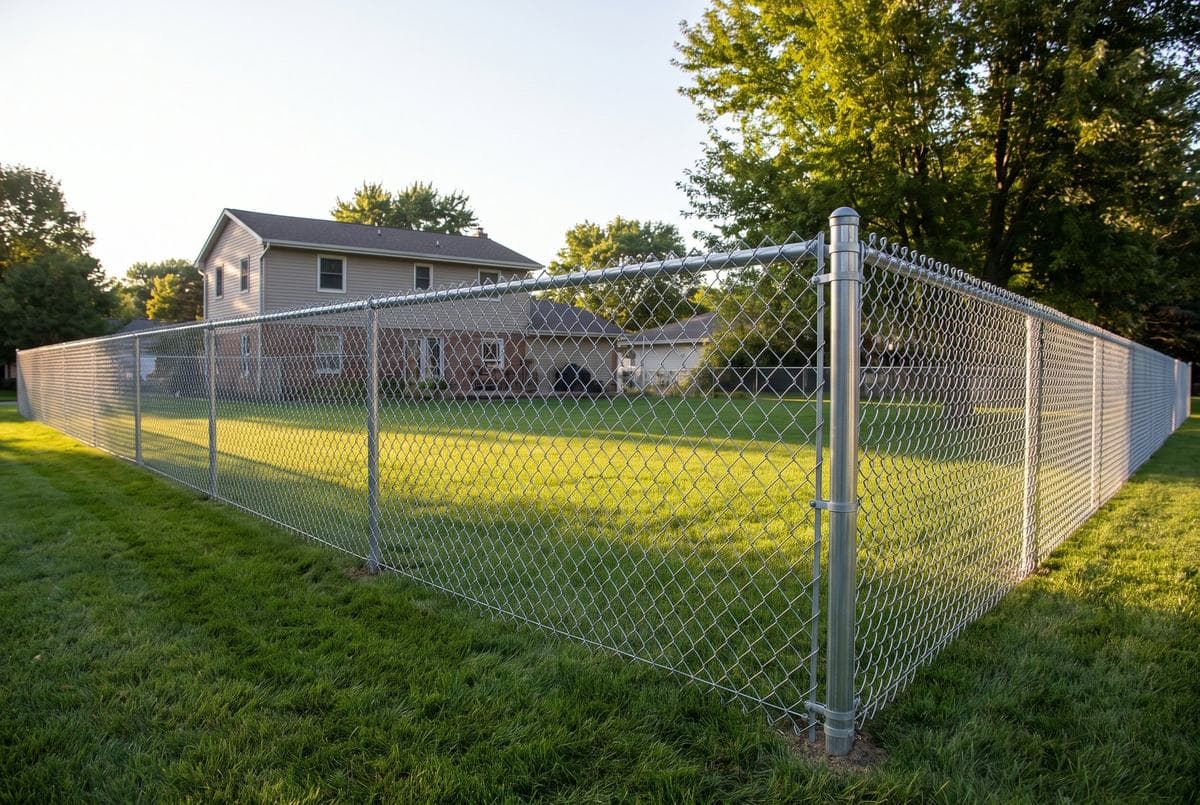
Zinc-coated steel fabric, the proven and economical standard for pet and backyard containment.
Black Vinyl-Coated
A polymer coating over the steel core softens the industrial look and blends into landscaping, for a bit more up front.
Common Heights
Four foot is the usual pet-containment height, five is the in-between, and six is what people ask for when the fence has to hold a bigger dog or screen a work yard. Black vinyl-coated is the same steel core with a polymer jacket over it, and it reads much quieter against a lawn and a treeline.
What Is Actually In the Fence
Chain Link Is Cheap To Buy and Easy To Cheapen.
Two chain link bids can look identical on a page and be two different fences. The differences live in four places: the gauge of the fabric, whether there is a top rail, whether there is a tension wire at the bottom, and what the posts are. Here is where we land on each.
Fabric gauge
9 gauge, not 11
Gauge is the thickness of the wire woven into the fabric, and a lower number means heavier wire. 9 gauge is the common residential spec and the one we quote. The 11 and 11.5 gauge rolls are the cheap grade: lighter wire that dents, stretches, and loses its shape sooner. If a bid next to ours is a surprise, the gauge is the first line to check.
Top rail
A rail across the top
A top rail runs post to post through the loop caps and gives the fabric something to hang from. Without it the top of the fence folds the first time a kid leans on it or a dog puts its paws up. It is part of how we build a residential chain link fence, not an upgrade line.
Tension wire
Tight to the ground
A tension wire along the bottom pulls the fabric down to grade so there is no gap for a dog to push under. On a yard that falls away toward the back line, that bottom wire is what keeps the fence honest where the ground drops.
Privacy slats
Screening, if you want it
Slats weave vertically through the fabric and take an open fence to mostly closed. It is a way to get screening without changing fence types. It is not a cedar privacy fence, and we will say so before you buy it.
And the posts underneath
Wood posts rot, lean, and heave out of the ground within a few Kansas winters — it's the single most common reason a fence fails early. Ovora conceals a galvanized steel post inside every cedar fence and sets steel on every fence type we install, as standard. Not an upgrade option.
Chain link is the fence type where a contractor is most tempted to save a few dollars per hole, because the fabric is what the customer is looking at. We set galvanized steel on this fence the same way we set it inside a cedar privacy fence or a vinyl fence. Same standard, cheapest fence in the catalog.
Open Sightlines
Ornamental Iron Fence Installation
Open, elegant sightlines for front yards, pools, and estate-style properties.
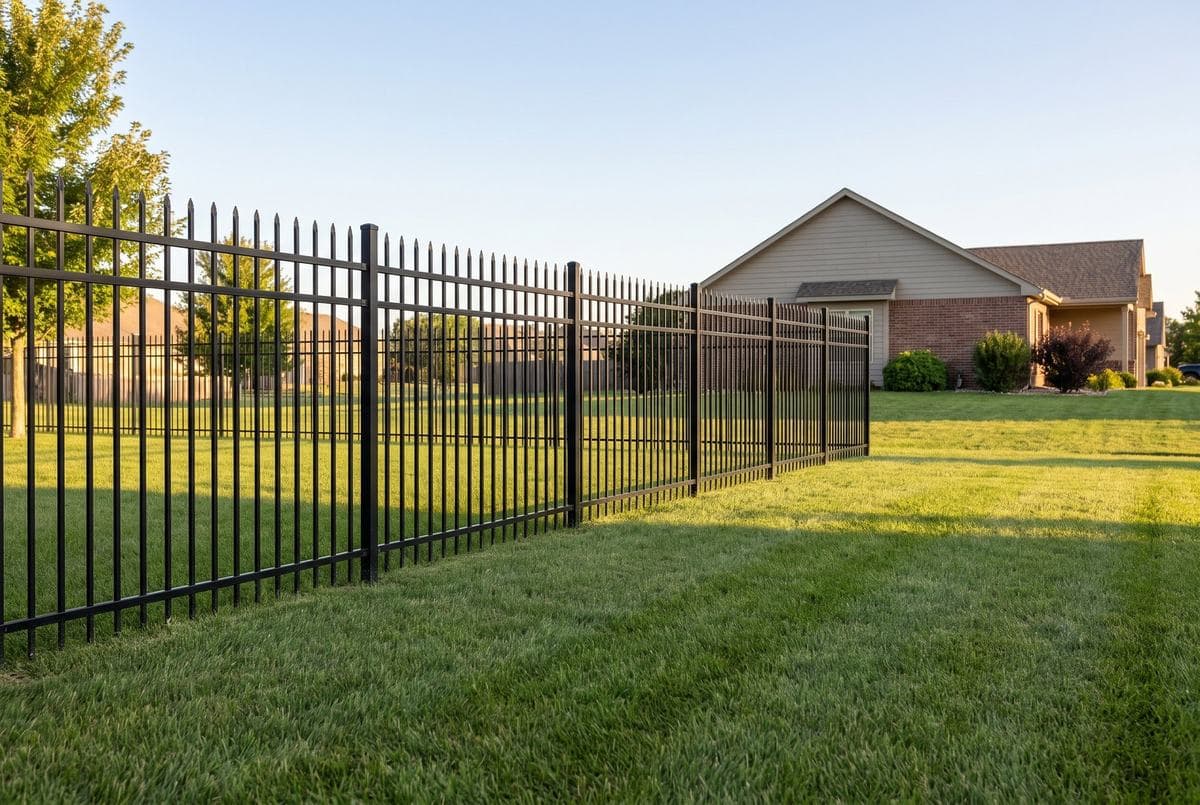
Ornamental iron is what you install when the point of the fence is to define a line without closing the view. Front yards, entries, driveway returns, and pool surrounds are where it earns its keep. Panels come in 4, 5, and 6 foot heights, in flat top, spear point, and arched profiles, and every one of them is built in 2-rail or 3-rail construction, with the extra mid rail adding rigidity on taller runs and steeper grade changes.
Flat Top
Clean, level pickets for a streamlined, modern line, the most-requested look for front yards.
Spear Point
Pickets taper to a pressed point, the traditional wrought-iron silhouette.
Arched / Rainbow
Panels bow gently upward between posts for a softer, more decorative line along a driveway or entry.
Common Heights
The Four Decisions
Metal, Finish, Slope, and the Bottom Six Inches.
An ornamental iron quote comes down to four questions, and none of them are about the picture in the brochure. Answer these and the rest of the design is taste.
Aluminum or steel
Two metals, two jobs
Aluminum panels do not rust, weigh less, and are the usual pick for a residential yard or a pool surround. Steel panels are heavier and stiffer, which is what you want on a long commercial run or a line that takes abuse. Both arrive powder coated from the manufacturer.
Powder coat
Baked on, not brushed on
Powder coat is applied dry and cured to the metal under heat, so the finish is part of the panel rather than a film sitting on top of it. That is why an ornamental fence does not ask for a paint weekend every few years the way old wrought iron did.
Rackable panels
Panels that follow the grade
A rackable panel pivots where the pickets meet the rails, so the whole section tilts with the slope instead of stair-stepping down it. On a Wichita lot with a slow fall toward the back line, racking is the difference between a fence that looks built for the yard and one that leaves a triangle of daylight under every section.
Puppy picket
A bottom a small dog cannot clear
A puppy picket option doubles the picket count through the lower portion of the panel and closes the gaps down there. Put it on the runs the dog actually uses and leave the rest standard, so you are not paying for it around the whole yard.
Pools
Pool Fences in Wichita
Chain link and ornamental iron are the two fences people put around a pool, for opposite reasons. Chain link is the economical way to satisfy an enclosure requirement. Ornamental iron is what you choose when you want to watch the water from the patio and still have a barrier that meets code.
Either way, the barrier around a pool is code, not a preference. Wichita and Sedgwick County exempt only very small, shallow, prefabricated pools from a permit, so an in-ground pool and the barrier around it is a MABCD permit matter. Our Wichita fence permit guide works through that in full, with the primary sources linked. The model-code baseline it publishes, to confirm with MABCD before you build, is:
- Barrier at least 48 inches high, measured on the side facing away from the pool
- No opening a 4-inch sphere can pass through, and 2 inches near the ground
- Gates self-closing and self-latching, opening away from the pool
- Latch release set at least 54 inches above grade
The gate is the part people get wrong. A pool gate has to swing shut and latch on its own, every time, without anybody thinking about it, which means self-closing hinges and a self-latching latch rather than the drop-rod and hasp that is fine on a back-yard gate. We spec pool gate hardware as pool gate hardware, and we would rather have the conversation at the quote than at an inspection. Ovora is insured, and we pull permits on every job that needs one.
Which One Is Right For You?
Same Steel Posts. Different Jobs.
Budget-conscious
Chain Link
- Keeping the budget in check
- Containment for pets and kids
- Side yards, rear yards, dog runs
- Pool barriers where code requires an enclosure
Open sightlines
Ornamental Iron
- Front yards and street-facing lines
- Pool surrounds where you want to see through, not around
- Estate-style curb appeal
- Framing a view instead of blocking it
Plenty of Wichita yards end up with both: ornamental iron across the front where the fence is seen, chain link down the side and back where it is only working. We will price it that way if that is the smart answer for your lot.
Same Standard, Every Fence
Every Post Is Galvanized Steel. Never Wood.
Wood posts rot, lean, and heave out of the ground within a few Kansas winters — it's the single most common reason a fence fails early. Ovora conceals a galvanized steel post inside every cedar fence and sets steel on every fence type we install, as standard. Not an upgrade option.
1-Year Workmanship Warranty
Plus the manufacturer's own warranty on the materials we install.
Daily Text Updates
Your Project Manager texts you progress every day the crew is on site.
The Price Is the Price
Itemized, on-site pricing with no mid-job upcharges for roots, rock, or hard ground.
811, Every Job
We call for a utility locate before we ever break ground — free quotes, no surprises.
FAQ
Chain Link and Ornamental Iron Questions
How much does a chain link fence cost in Wichita?
We do not publish a number on this page, because height, gauge, gates, and what the ground is doing move it too far to be useful. Our Wichita fence cost guide shows chain link and ornamental iron as market ranges alongside the other fence types, and the fence cost estimator will put a range on your own yard from a satellite measurement. The real number comes from us walking the lot, itemized in writing before we leave.
Does a chain link fence need a permit in Wichita?
Usually not. A residential fence up to 8 feet is exempt from a MABCD building permit, and chain link at 4, 5, or 6 feet sits well under that. The exceptions that matter are pool barriers and the suburbs that run their own permit desks, and both are covered in our Wichita fence permit guide. Ovora is insured, and we pull permits on every job that needs one.
Can ornamental iron follow a slope?
Yes, with rackable panels. The pickets pivot where they meet the rails, so the panel tilts with the grade and the bottom rail stays parallel to the ground instead of stepping down it in blocks. On a lot that falls toward the back line, racking is what keeps daylight out from under the fence. There is a limit to how much a panel will rack, so we check the fall on the walk before we quote it.
Chain link or ornamental iron: which is better for dogs?
Chain link, for most dogs, most of the time. The fabric has no gaps to slip through, a tension wire holds it tight to the ground, and it is the cheaper way to enclose a big yard. Ornamental iron works too, but the picket spacing is the thing to watch: a small dog can walk through a standard panel, which is what a puppy picket bottom is for. If the dog is a jumper, go to 5 or 6 feet in either material rather than counting on the design.
How long does installation take?
The clock starts before the crew does. We call 811 for a utility locate and wait for it to come back before anyone digs, on every job, with no exceptions for a run that looks obvious. Then the work goes in two passes: posts get set first, and the fabric or the panels go on after. Your Project Manager texts you an update every day the crew is on site. We give you the schedule for your specific yard at the quote, not a number off a web page.
More answers on our fence installation FAQ.
Ready for chain link or ornamental iron?
Get a free, no-pressure quote from Ovora Outdoor.