
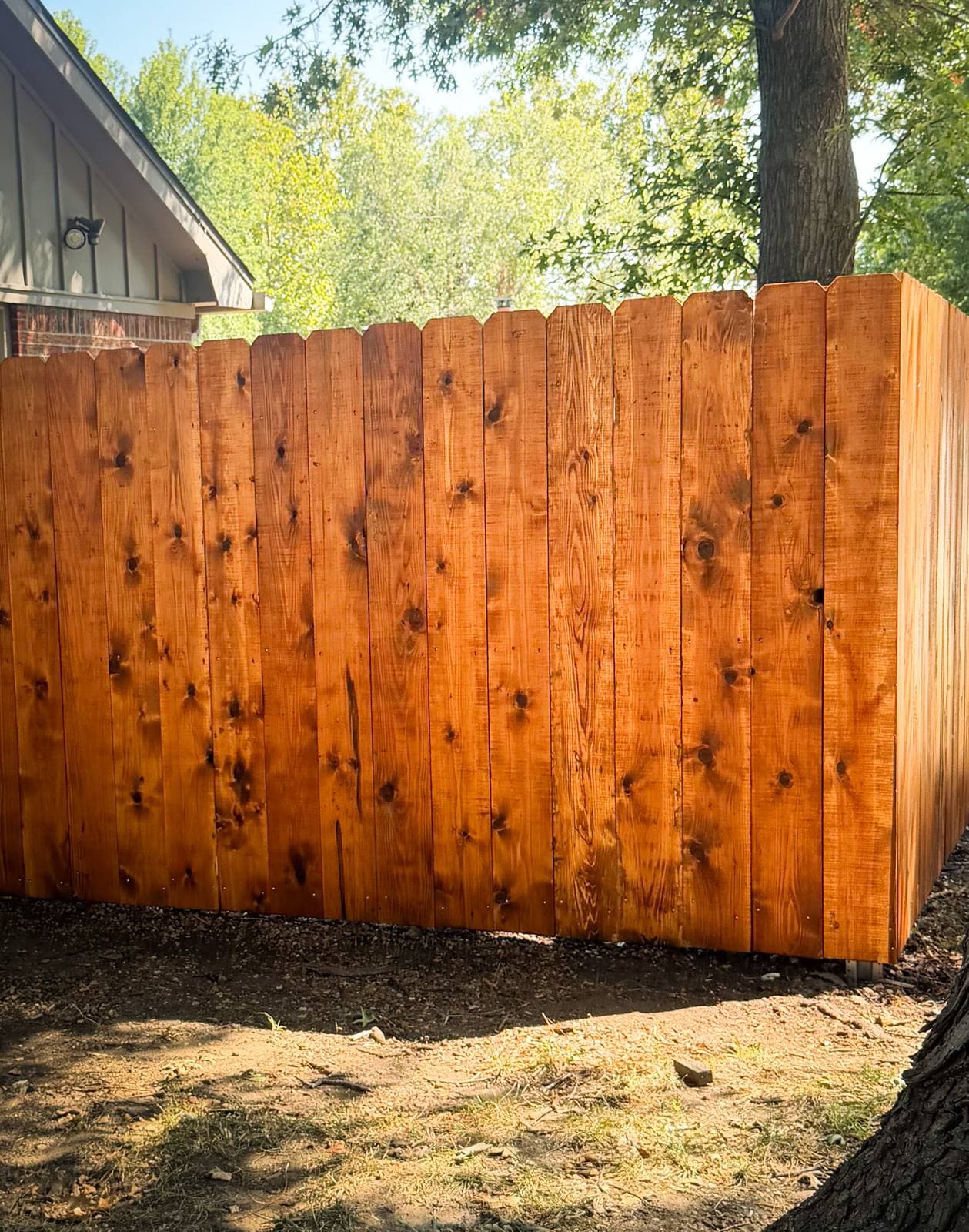
Stain it twice over its life and a cedar fence in Kansas should last 15 to 20 years. That's just as long as a budget vinyl fence. Leave it bare and plan on less. What really decides it isn't the pickets. It's what the posts are made of, how deep they sit, and whether anyone ever put stain on the wood.
We build cedar and vinyl both, and we replace pickets on old fences every week, so we see how Wichita fences die. Here's the honest version.
How long does a cedar fence last in Kansas?
15 to 20 years if it's stained twice. The first coat goes on new, and the second goes on a few years later when the color starts to fade. Cedar naturally resists rot and bugs better than pine, and an oil-based stain keeps the sun and the water out of it. Do that, and the boards outlast the posts on most fences in town.
Skip the stain and the wood goes gray, dries out and starts cracking. Pickets split, nails back out, and the bottoms rot where sprinklers hit them. That fence is on the clock a lot sooner. Most of the picket replacement calls we get are bare cedar.
What actually decides how long a fence lasts? The posts.
A fence fails at the post, not the face. A treated 4x4 rots right at the ground, where wet dirt meets air. Once the post goes, it doesn't matter how good the pickets look. The whole run leans and there's no fixing it without digging.
That's why every cedar fence we build sits on a galvanized steel post, hidden inside the cedar. Steel doesn't rot at grade. It goes 30 inches down, past Wichita's frost line, set in concrete. The fence still reads as all wood from the yard. Our cedar privacy fence page has the full spec.
Kansas wind is the other post killer. A privacy fence is a solid sail. Set it on posts in green concrete and hang the pickets the same day, and a gusty afternoon leans the whole thing before the concrete cures. You won't see it that week. You'll see it in year two. We set posts one day and hang pickets the next for exactly that reason.
Does staining a cedar fence make it last longer?
Yes, and it's the cheapest thing you can do for it. We use Wood Defender, an oil-based stain that soaks into the wood instead of sitting on top. It wears, it never peels. When it's time for the second coat, it goes straight over the old one. No stripping, no sanding. Colors and details are on our fence staining page.
On our jobs, staining is your choice. If you want it, it's on the quote before you sign, never an upsell after the fence is standing. And we'll restain a fence we didn't build, too.
Which lasts longer in Kansas, cedar or vinyl?
We build both, so here's the true comparison. Cedar costs less the day it goes in, looks like real wood, and one bad picket is a five-minute fix. It wants a restain every few years.
Vinyl costs more up front and never needs stain. It still gets washed, budget vinyl can yellow, and a Kansas hail storm can crack a panel you replace whole. Budget vinyl lasts about 15 to 20 years. The Country Estate vinyl we install carries a 50-year or limited lifetime warranty that covers discoloration, so it's a different product. The full answer is in how long a vinyl fence lasts in Kansas.
Over 15 years the two land close. Many yards come out ahead on cedar, and you still own a fence you can restain, repair or recolor. Either way it should sit on concealed steel posts for Kansas wind. The side by side is on cedar vs. vinyl in Kansas.
What shortens a cedar fence's life?
- Wood posts. They rot at the ground line, and the fence goes with them
- Shallow holes that stop above the frost line. Freeze and thaw lift the post, and Kansas dirt moves
- Pickets hung the same day the posts are set, so the wind leans the run before the concrete cures
- Smooth shank nails. They back out as the wood swells and dries, year after year
- Regular steel fasteners. Cedar reacts with them and bleeds black streaks down every board
- Thin pickets. A 5/8 inch board cups and cracks sooner than a 7/8 inch board
- Sprinklers hitting the bottom of the fence every morning
- No stain, ever
Is my old cedar fence worth fixing, or is it done?
Push on a post. If the posts are solid and the rails are sound, the fence has years left, even if a dozen pickets are cracked or missing. That's a repair, not a replacement. Our Fence Repair service puts new cedar pickets on your existing rails, screwed on, old wood hauled off, in one visit.
If the posts move when you push, or a run is already leaning, the fence is telling you it's done. New pickets on rotten posts is money spent twice. We'll tell you which one you have, in writing, and we won't sell you a fence you don't need.
How we build a cedar fence to last 15 to 20 years
- Galvanized steel posts inside every cedar fence, 30 inches deep
- Posts set in concrete one day, pickets hung the next
- Stainless steel ring shank fasteners, two per rail
- 7/8 inch thick cedar pickets, about twice the wood of a standard board
- Wood Defender oil-based stain, priced on the quote if you want it
Cedar fence lifespan questions, answered
How long does a cedar fence last in Kansas?
Stained twice over its life, 15 to 20 years. Left bare, plan on less. The posts decide it more than the pickets do. A cedar fence on steel posts set 30 inches deep outlasts the same fence on wood posts every time.
How often should you stain a cedar fence in Kansas?
Every few years, whenever the color starts to fade. Twice over the life of the fence is what gets you to 15 to 20 years. We use Wood Defender, an oil-based stain, and the next coat goes straight over the old one with no stripping.
Does cedar last longer than vinyl?
Stained twice, cedar goes 15 to 20 years, the same as budget vinyl. Budget vinyl can yellow, and hail can crack a panel you replace whole. The Country Estate vinyl we install is warranted for 50 years or a limited lifetime. Cedar wants a restain every few years, and one bad picket is a five-minute fix. Both should sit on concealed steel posts.
How do I know if my cedar fence needs to be replaced?
Push on the posts. Solid posts and sound rails mean the fence has years left, and cracked or missing pickets are a repair. Posts that move, or a run that already leans, mean the fence is done.
Want a straight answer on your fence? We'll walk it with you, push on the posts, and tell you in writing whether it needs pickets or a rebuild.